
Mazda CX-5 Service & Repair Manual: Quick Release Connector (Emission System) Removal/Installation
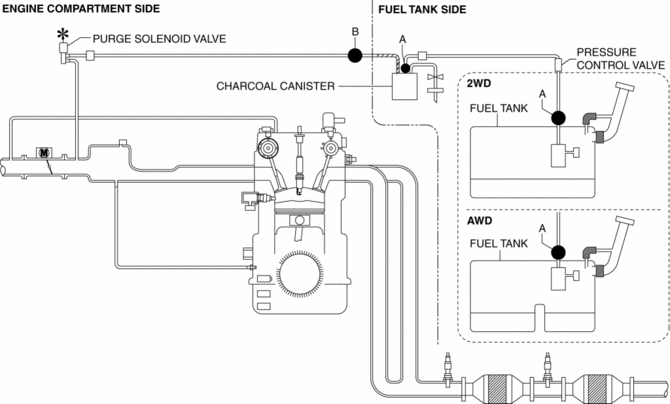
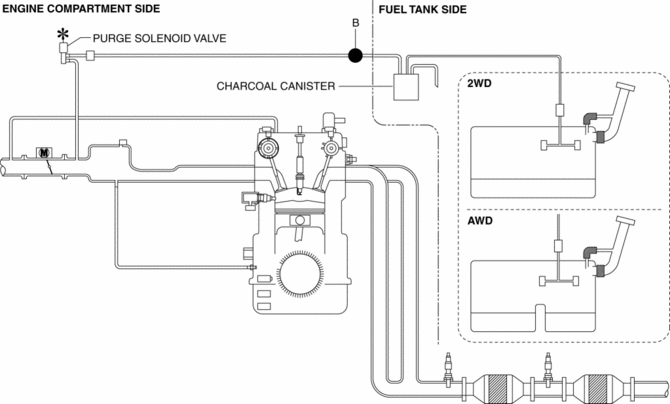
Quick Release Connector Type and Position
CAUTION:
-
Verify the type and location, and install/remove properly.
U.S.A. and CANADA
Except U.S.A. and CANADA
Type A Removal
CAUTION:
-
Be careful not to damage the evaporative pipe when unlocking the retainer.
NOTE:
-
If the quick release connector is removed, replace the retainer with a new one.
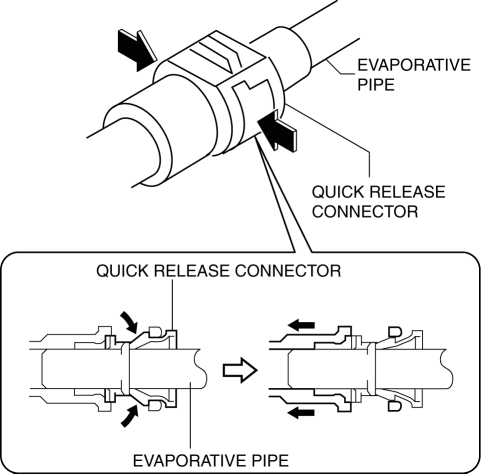
1. Set the finger parallel to the quick release connector.
NOTE:
-
The quick release connector can be removed by pushing the center of the retainer tabs.
-
The retainer is attached to the evaporative pipe even after the connector is disconnected.
2. Hold the center of the retainer tabs with the finger and press the retainer.
3. Pull the connector side and disconnect the quick release connector.
4. Cover the disconnected quick release connector and evaporative pipe with vinyl sheeting or a similar material to prevent it from getting scratched or dirty.
Type B Removal
1. Complete the “BEFORE SERVICE PRECAUTION”..
2. Move the retainer upward using a small flathead screwdriver or a similar tool.
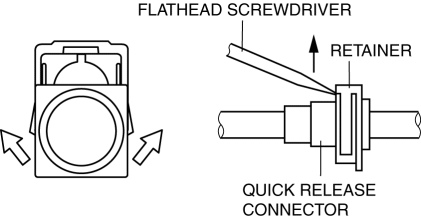
3. Pull out the evaporative hose straight from the evaporative pipe and disconnect it.
4. Cover the disconnected quick release connector and evaporative pipe with vinyl sheeting or a similar material to prevent it from getting scratched or dirty.
Type A Installation
CAUTION:
-
Always replace the retainer with a new one when using SST 49 E042 001, otherwise, evaporative leakage could result.
NOTE:
-
If the quick release connector O-ring is damaged or has slipped, replace the piping component.
-
A checker tab is integrated with the quick release connector for new evaporative hoses. Remove the checker tab from the quick release connector after the connector is completely engaged with the evaporative pipe.
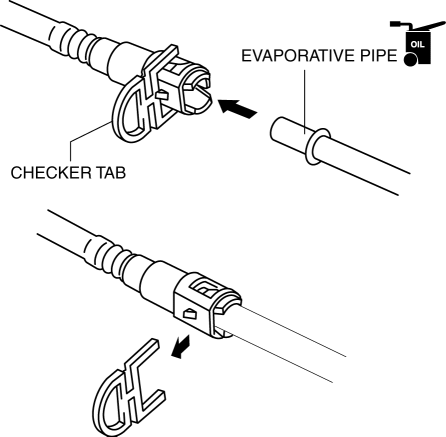
1. Inspect the evaporative hose and evaporative pipe sealing surface for damage and deformation.
-
If there is any malfunction, replace it with a new one.
2. Apply a small amount of clean engine oil to the sealing surface of the evaporative pipe.
3. Install a new retainer to the quick release connector.
4. Reconnect the hose straight to the pipe until a click is heard.
5. Lightly pull and push the quick release connector a few times by hand, and then verify that it is connected securely.
Type B Installation
NOTE:
-
If the quick release connector O-ring is damaged or has slipped, replace the evaporative hose.
-
A checker tab is integrated with the quick release connector for new evaporative hoses. Remove the checker tab from the quick release connector after the connector is completely engaged with the evaporative pipe.
1. Inspect the evaporative hose and evaporative pipe sealing surface for damage and deformation.
-
If there is any malfunction, replace it with a new one.
2. Apply a small amount of clean engine oil to the sealing surface of the evaporative pipe.
3. Install the quick release connector.
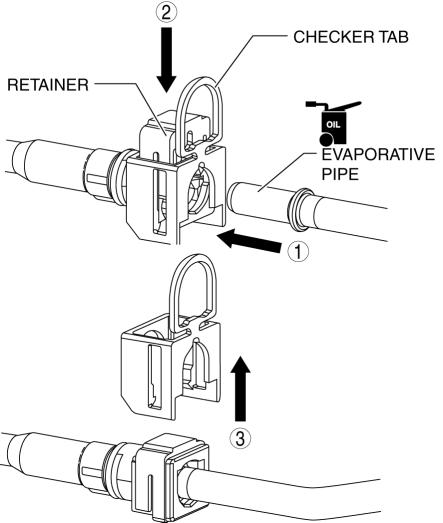
-
Insert the evaporative pipe straight to the end of the quick release connector.
-
Push down the retainer using a finger.
-
If the retainer cannot be pushed down, push the evaporative pipe further to the quick release connector.
4. Lightly pull and push the quick release connector a few times by hand, and then verify that it is connected securely.
 Purge Solenoid Valve
Purpose, Function
Introduces evaporative gas absorbed by the charcoal canister to the intake
manifold.
The purge solenoid valve opens according to the control signal from the PCM.
...
 Quick Release Connector (Emission System)
Purpose, Function
Serviceability has been improved by the easy disconnection/connection.
Construction
The following types of quick release connectors are used.
U.S.A. and CANADA
...
Other materials:
Wheel Hub Component Inspection
Wheel Bearing Excessive Play Inspection
1. Install the magnetic base and dial gauge as shown in the figure and measure
the wheel bearing axial excessive play.
If it exceeds the maximum specification, replace the wheel hub component.
Rear wheel bearing maximum play
...
Refrigerant System Service Cautions
Handling Insufficient Refrigerant Level
If an insufficient refrigerant level is detected at troubleshooting, do
not charge (add) the refrigerant. Because an accurate amount of refrigerant
cannot be determined from the pressure indicated on the manifold gauge, never
charge the refrige ...
Front Fog Lights Indicator Light
Purpose
Notifies the user that the front fog lights are illuminated.
Function
Illuminates when the front fog light illumination conditions are met.
Construction
Displayed in the instrument cluster.
Operation
1. With the light switch in the TNS, HEAD, or ...
