
Mazda CX-5 Service & Repair Manual: Steering Gear And Linkage
Purpose/ Function
-
The rotational movement input from the intermediate shaft is converted to a linear movement in the horizontal direction of the steering rack by the rack and pinion mechanism, and then transmitted to the tires and wheels.
Construction
-
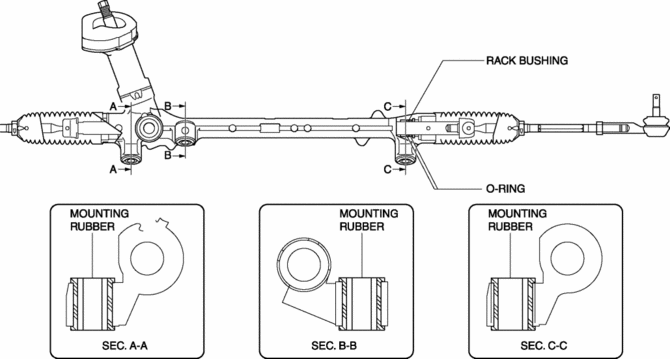
A size and weight-reduced rack and pinion system steering gear has been adopted.
-
Response and handling stability have been improved by the heightened support rigidity due to the integration of the steering gear mounts (three locations) and gear housing.
-
By using a higher steering gear ratio (15.5), the steerability has been improved.
-
By using O-rings on the support yoke and rack bushing, quietness has been improved.
Operation
-
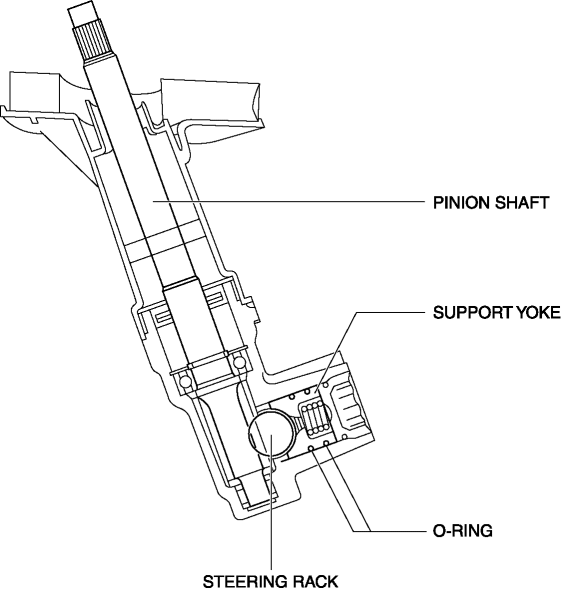
The rotational movement input from the steering shaft is converted to a linear movement in the horizontal direction of the steering rack by engaging the pinion shaft connected to the steering shaft and teeth of the steering rack. This linear movement is transmitted via the inner and outer ball joints to the steering knuckle to steer the tires left or right.
Fail-safe
-
Function not equipped.
 Torque Sensor
Purpose/ Function
The torque sensor detects the steering torque and the steering direction,
and outputs the signal to the Electric Power Steering (EPS) control module (CM).
Constructio ...
 Steering Gear And Linkage Assembly
CAUTION:
To prevent damage to the steering gear, secure it to the vise using a copper
plate or clean cloth.
1. Assemble in the order shown in the figure.
1
...
Other materials:
Steering Gear And Linkage Removal/Installation
CAUTION:
Performing the following procedures without first removing the ABS wheel-speed
sensor may possibly cause an open circuit in the wiring harness if it is pulled
by mistake. Before performing the following procedures, disconnect the ABS wheel-speed
sensor (axle side) and fix t ...
Engine Oil Level Inspection
1. Position the vehicle on level ground.
2. Warm up the engine.
3. Stop the engine and allow at least 5 min before continuing.
4. Remove the dipstick, wipe it cleanly, and reinstall it fully.
5. Remove the dipstick and verify that the oil level is between the F and L marks
on the dipstick. ...
Passenger Compartment Temperature Sensor [Full Auto Air Conditioner]
Purpose
The passenger compartment temperature sensor detects the cabin temperature.
Function
The passenger compartment temperature sensor converts the detected temperature
to an electric signal.
Construction
A thermistor-type passenger compartment temperature sens ...
