
Mazda CX-5 Service & Repair Manual: Rear Spoiler Removal/Installation
Removal
WARNING:
-
Using a utility knife with bare hands can cause injury. Always wear gloves when using a utility knife.
1. Remove the liftgate upper trim.
2. Remove caps A.
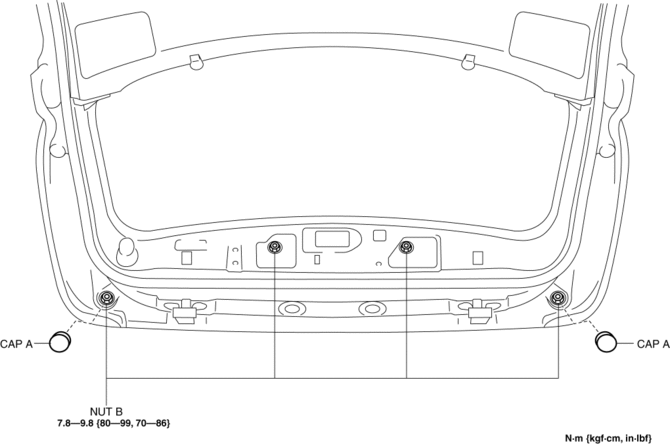
3. Remove nuts B.
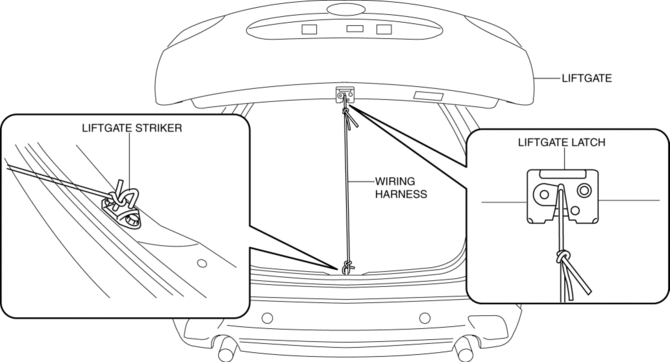
4. Attach a piece of wire between the liftgate striker and liftgate latch to hold the liftgate in the half-opened position as shown below.
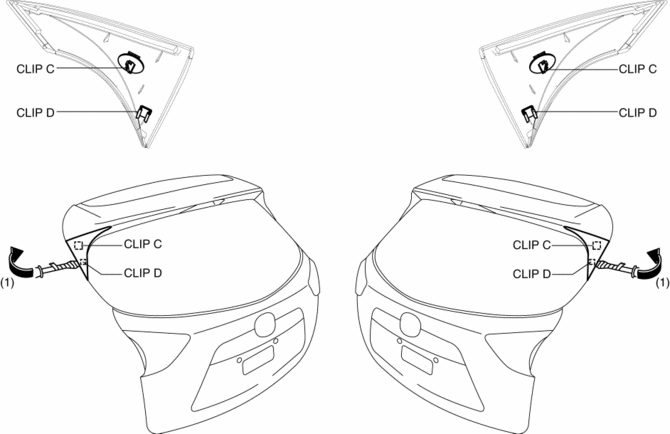
5. Insert a tape-wrapped flathead screwdriver in the locations shown below to remove clips C and D in the direction of the arrow (1).
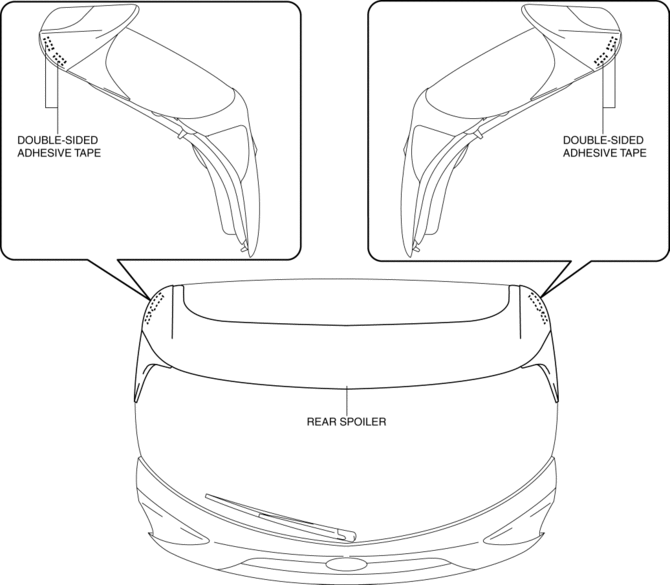
6. Using a utility knife, carefully remove the double-sided adhesive tape in the locations shown below.
CAUTION:
-
Be careful not the damage the vehicle's paint during tape removal.
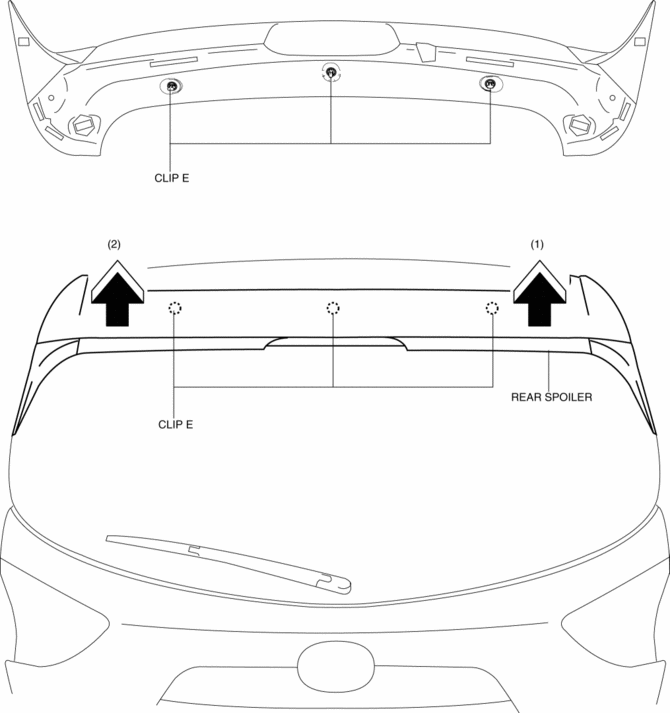
7. Pull the rear spoiler in the direction of the arrows in the order of (1), (2) and remove it while detaching clips E.
CAUTION:
-
When removing the rear spoiler clips E, the rear spoiler may fall and be damaged. Perform the rear spoiler clip removal using two people.
Installation
NOTE:
-
To facilitate the procedure after rear spoiler installation, peel the protective tape adhered during removal before installing the rear spoiler.
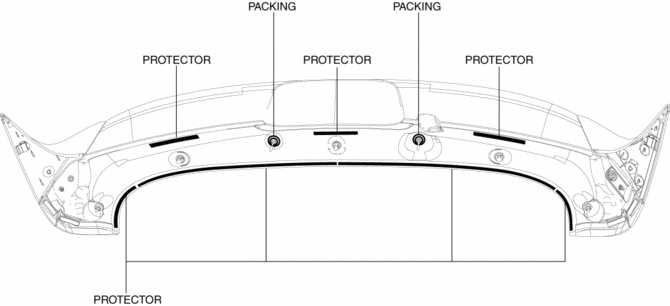
1. When a rear spoiler is to be reused, perform the following procedure:
a. Remove the packing and protector remaining on the rear spoiler after removal.
b. Remove any grease and dirt from the packing and protector affixing area.
c. Affix packing and protector to the position shown in the figure.
d. If the protector is damaged, replace the part that is damaged with a new protector.
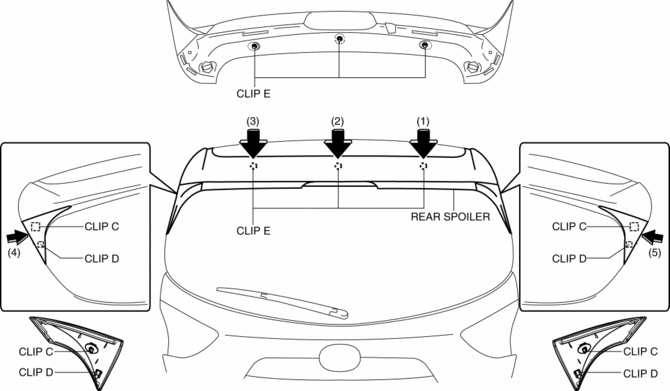
2. Push the rear spoiler in the direction of the arrows in the order of (1), (2), (3), (4), (5) and install the rear spoiler while install clips C, D and E.
3. Install nuts B.
4. Install caps A.
5. Install the liftgate upper trim.
 Rear Side Panel Removal [Panel Replacement]
Symbol Mark
Removal Procedure
1. Drill the 11 locations shown in the figure.
2. Remove the rear side panel. ...
 Repairable Range Of Polypropylene Bumpers [Plastic Body Parts]
The three types of damaged bumpers shown below are considered repairable. Although
a bumper which has been damaged greater than this could also be repaired, it should
be replaced with a new one be ...
Other materials:
Fuel Tank Pressure Sensor Inspection
Voltage Inspection
NOTE:
The fuel tank pressure sensor cannot be removed as a single unit. When replacing
the fuel tank pressure sensor, replace it together with the charcoal canister
as a single unit.
1. Disconnect the negative battery cable..
2. Disconnect the fuel tank pres ...
Passenger Compartment Temperature Sensor [Full Auto Air Conditioner]
Purpose
The passenger compartment temperature sensor detects the cabin temperature.
Function
The passenger compartment temperature sensor converts the detected temperature
to an electric signal.
Construction
A thermistor-type passenger compartment temperature sens ...
Exterior Care
The paintwork on your Mazda represents the latest technical developments in composition
and methods of application.
Environmental hazards, however, can harm the paint's protective properties, if
proper care is not taken.
Here are some examples of possible damage, with tips on how to preven ...
