
Mazda CX-5 Service & Repair Manual: Front Door Module Panel Removal/Installation
1. Perform the front door glass preparation..
2. Disconnect the negative battery cable..
3. Remove the following parts:
a. Inner garnish.
b. Front door trim.
c. Front door speaker.
d. Front door glass.
NOTE:
-
After removing the front door trim, secure the inner handle using screws so that the procedure is performed smoothly.
4. Remove bolt A.
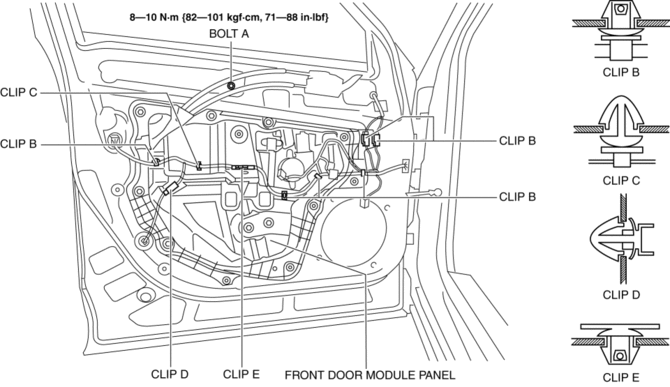
5. Detach front door wiring harness securing clips B, C, D and E.
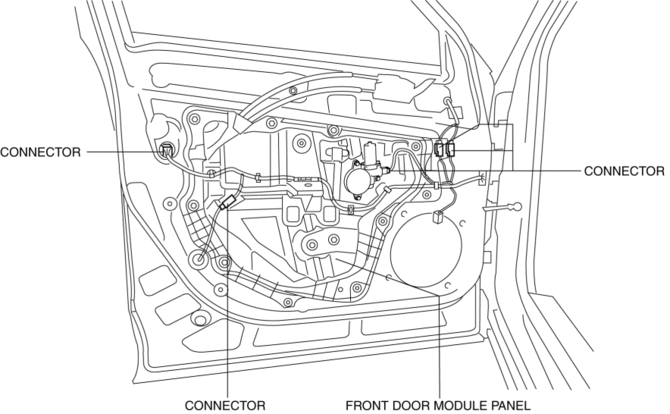
6. Disconnect the connectors shown in the figure.
7. Remove screws F.
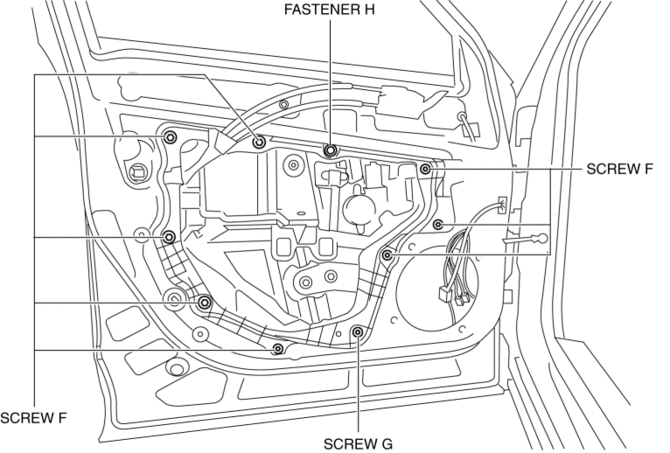
8. Remove screw G.
9. Remove fastener H.
10. Pull the front door module panel in the direction of arrow (1) shown in the figure and remove the protector and pin from the front door inner panel.
CAUTION:
-
If the protector does not come out easily from the front door inner panel, pulling the front door module panel forcibly may cause the front door module panel to deform. If the protector does not come out easily, remove the front door module panel while gradually removing the protector.
-
If the front power window regulator contacts the front door inner panel during the front door module panel removal, the coating film on the front door inner panel may get scratched, and the front door module panel and front power window regulator could be damaged. Remove the front door module panel while verifying that the front power window regulator and the front door inner panel do not contact each other.
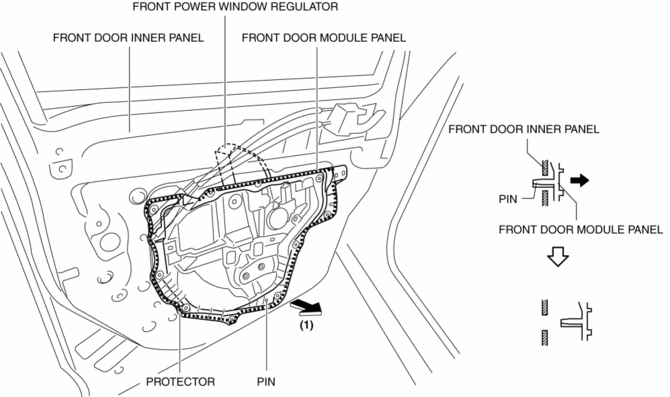
11. Move the front door module panel in the direction of arrow (2) shown in the figure so that the upper part of the front power window regulator does not contact the front door inner panel, and remove the front door module panel and the front power window regulator as a single unit.
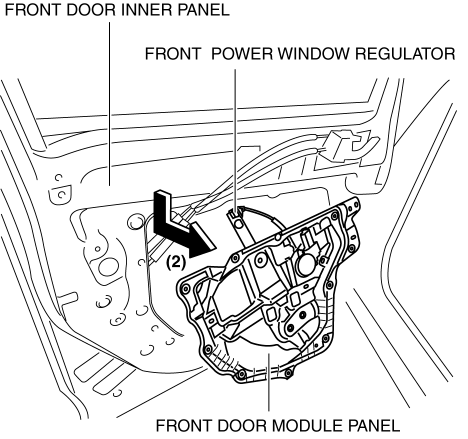
12. Remove the front power window motor..
13. Remove the front power window regulator..
14. Install in the reverse order of removal.
 Front Door Latch Switch Inspection
1. Perform the front door glass preparation..
2. Disconnect the negative battery cable..
3. Remove the following parts:
a. Inner garnish.
b. Front door trim.
c. Front door glass.
d. Front ...
 Front Door Removal/Installation
WARNING:
Removing the front door without supporting it could cause the front door
to fall and cause serious injury. Always perform the procedure with at least
one other person to prevent ...
Other materials:
Rear ABS Wheel Speed Sensor Inspection [Awd]
Installation Visual Inspection
1. Inspect the following items:
If there is any malfunction, replace the applicable part.
a. Excessive play of the ABS wheel-speed sensor
b. Deformation of the ABS wheel-speed sensor
c. Deformation or damage of the ABS sensor rotor
Clearance Inspec ...
Map Light Removal/Installation
Front Map Light
1. Disconnect the negative battery cable..
2. Open the sunglasses holder.
3. Remove the screws from the front map light.
4. Move the front map light in the direction of the arrow (1) shown in the figure
and pull out the pin from the bracket.
CAUTION:
Be careful ...
Front Fog Light Bulb Removal/Installation
1. Disconnect the negative battery cable..
2. Remove the mudguard screws.
3. Disconnect the connector.
4. Rotate the front fog light bulb in the direction of the arrow (1) shown in
the figure and remove it from the front fog light in the direction of the arrow
(2) shown in the figu ...
