
Mazda CX-5 Service & Repair Manual: Rear Combination Light Removal/Installation
NOTE:
-
Fogging or condensation on the inside of the rear combination lights may occur due to a natural phenomenon occurring as a result of a temperature difference between the interior and exterior of the combination lights. However, it has no effect on the light performance because the temperature inside the rear combination lights rises after illuminating the brake/taillight bulbs or a period of time has elapsed.
1. Disconnect the negative battery cable..
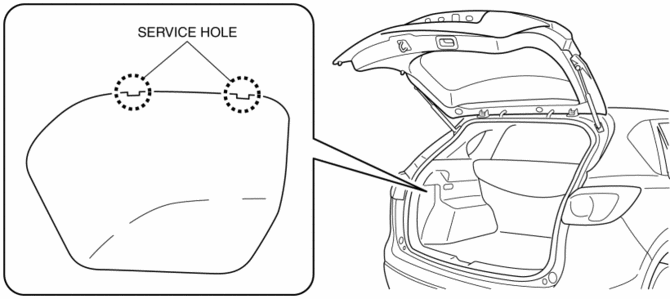
2. Insert a tape-wrapped flathead screwdriver into the service hole in the position shown in the figure.
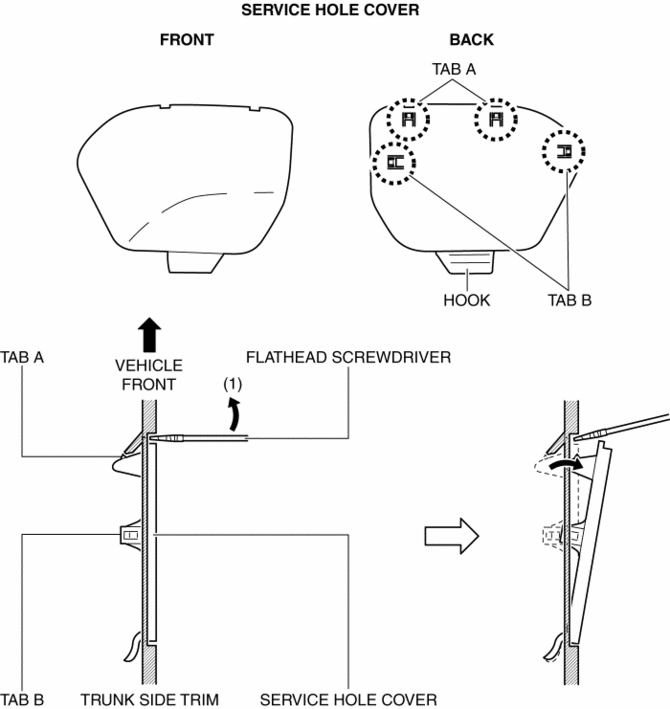
3. Move the flathead screwdriver in the direction of the arrow (1) shown in the figure, pull out the service hole cover, and detach the service hole cover tab and trunk side trim.
4. Pull out the service hole cover in the direction of the arrow (2) shown in the figure and pull out the service hole cover hook from the trunk side trim.
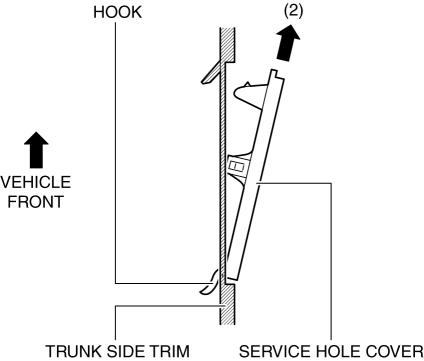
5. Remove the service hole cover.
6. Disconnect the connectors.
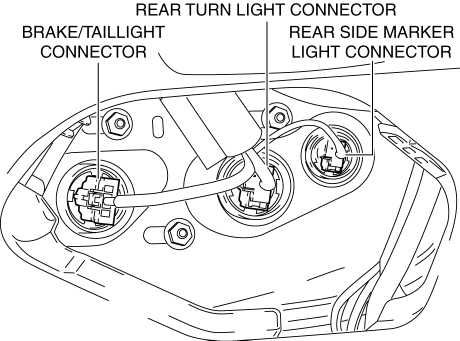
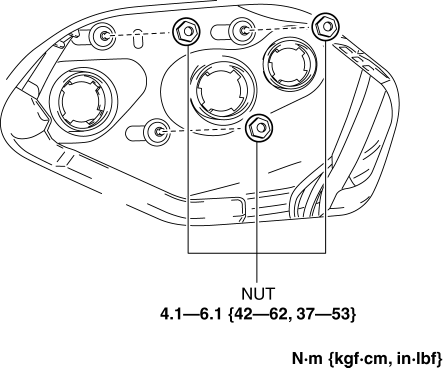
7. Remove the nuts.
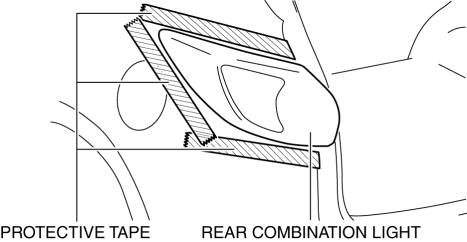
8. To prevent scratches or damage, affix protective tape to the position shown in the figure.
CAUTION:
-
When the rear combination light is removed from the body, perform the procedure after affixing protective tape to the body. Otherwise, the body could interfere with the rear combination light and cause scratching or damage to the body.
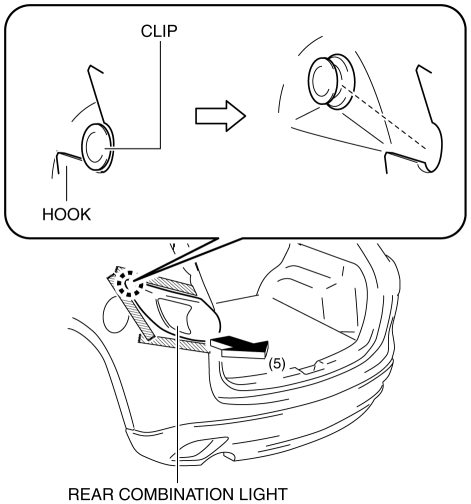
9. Pull the rear combination light in the direction of the arrow (5) shown in the figure and remove the rear combination light hook from the clip.
10. Pull out the rear combination light pin.
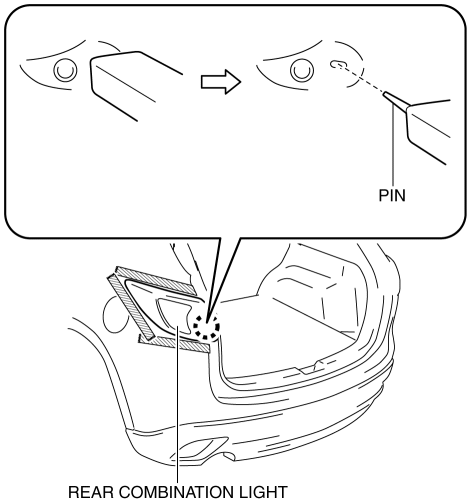
11. Remove the rear combination light.
12. Install in the reverse order of removal.
 Rear Combination Light
Purpose
The rear combination lights are used to signal the following conditions to
vehicles/people at the rear.
Rear turn lights: Signals a left or right turn of the vehicle.
...
 Rear Side Marker Light Bulb Removal/Installation
1. Disconnect the negative battery cable..
2. Insert a tape-wrapped flathead screwdriver into the service hole in the position
shown in the figure.
3. Move the flathead screwdriver in the di ...
Other materials:
Curtain Air Bag Module [Standard Deployment Control System]
Purpose
When a curtain air bag module receives an impact from a lateral collision,
the operation (deployment) of the air bag mediates the impact to the head of
the driver and front passenger.
Function
When a curtain air bag module receives an impact from a lateral collision ...
Electric Variable Valve Timing Relay [Skyactiv G 2.0]
Purpose, Function
The electric variable valve timing actuator relay supplies power to the electric
variable valve timing motor/driver after receiving the signal from the PCM.
Construction
The electric variable valve timing actuator relay is installed to the relay
block..
...
Push Button Start Inspection
1. Remove the push button start..
2. Verify that the continuity between the push button start terminals is as indicated
in the table.
If the continuity can be verified as indicated in the table, go to the next
step.
If not as indicated in the table, replace the push bu ...
