
Mazda CX-5 Service & Repair Manual: Hydraulic Pressure Control System Outline [Fw6 A EL, Fw6 Ax EL]
Outline
-
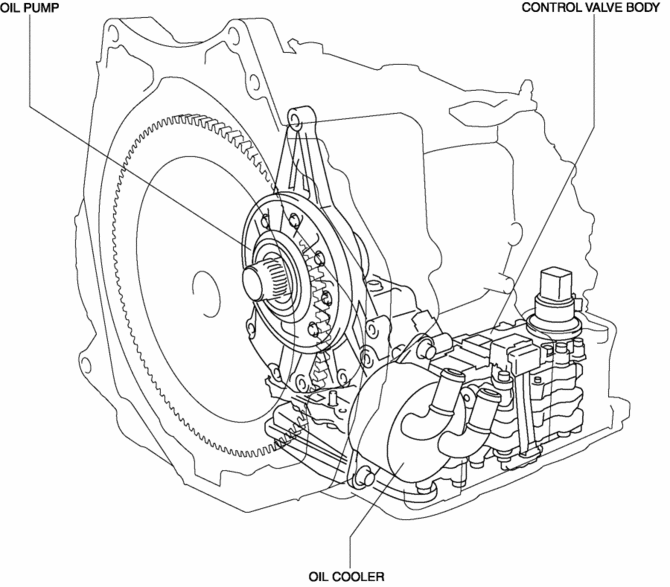
The hydraulic control mechanism consists of an oil cooler which maintains the hydraulic pressure at the optimum temperature, a control valve body and each shift valve which perform adjustment and circuit switching of the hydraulic pressure based on the control content calculated by the TCM, and the oil pump which generates the hydraulic pressure of each clutch and brake.
Construction
Structural view
 Fuel Injection Control System
Outline
Performs optimum fuel injection according to engine operation conditions.
The PCM determines the engine operation conditions based on the signals from
each input device and d ...
 Hydraulic Variable Valve Timing Control
Outline
Changes the exhaust valve timing according to engine operation conditions
to improve engine output, fuel economy, and emission performance.
Based on each input signal, the PC ...
Other materials:
Rear Center Seat Belt Removal/Installation
CAUTION:
The ELR (emergency locking retractor) has a spring that will unwind if the
retractor cover is removed. The spring cannot be rewound by hand. If this occurs,
the ELR will not work properly. Therefore, do not disassemble the retractor.
1. Press the release switch, then dis ...
Side Wall Removal/Installation
1. Pull the side wall in the direction of the arrow in the order of (1), (2)
and remove it while detaching hooks A and clip B.
2. Pull the side wall in the direction of the arrow (3) and remove it while detaching
the guide C.
CAUTION:
If the hooks A and clip B is removed forceful ...
Rear Seat
Purpose, Function
The following two types of rear seats have been adopted.
6:4 split-type seat
4:2:4 split-type seat
The following functions have been adopted for the rear seat to protect passengers
during a collision or emergency braking.
...
