
Mazda CX-5 Service & Repair Manual: Engine Coolant Protection Inspection
1. Measure the engine coolant temperature and specific gravity using a thermometer and a hydrometer.
CAUTION:
-
Use engine coolant at a concentration that meets the environmental conditions in which the vehicle is driven, otherwise engine damage could occur.
-
The engine has aluminum parts and must be protected by an ethylene-glycol-based coolant to prevent corrosion and freezing.
-
Do not use coolants containing Alcohol, Methanol, Borate or Silicate. These coolants could damage the cooling system.
-
Use only soft (demineralized) water in the coolant mixture. Water that contains minerals will cut down on the coolant’s effectiveness.
-
Engine coolant damages paint. If engine coolant does get on a painted surface, rinse it off quickly.
NOTE:
-
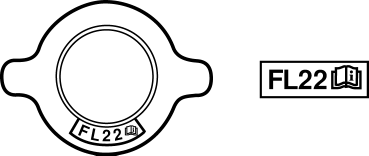
If the “FL22” mark is shown on or near the cooling system cap, use Mazda Genuine FL22 engine coolant.
-
FL22 type engine coolant is shipped as a diluted solution. Use the solution as is when replacing coolant.
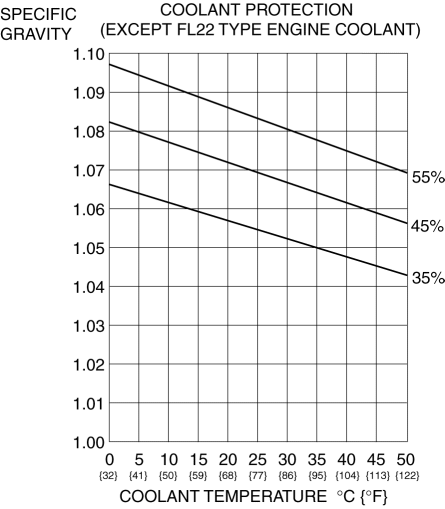
2. Determine the engine coolant protection level by referring to the graph shown in the figure.
-
If the engine coolant protection level is not correct, add water or engine coolant.
 Engine Coolant Level Inspection
WARNING:
Never remove the cooling system cap or loosen the radiator drain plug while
the engine is running, or when the engine and radiator are hot. Scalding engine
coolant and steam may ...
 Engine Coolant Replacement
WARNING:
Never remove the cooling system cap or loosen the radiator drain plug while
the engine is running, or when the engine and radiator are hot. Scalding engine
coolant and steam may ...
Other materials:
Front Door Key Cylinder Removal/Installation
1. Disconnect the negative battery cable..
2. Remove the service hole cover.
3. Detach the screw from the front door key cylinder.
NOTE:
The screw cannot be removed because the front outer handle bracket has a
stopper which prevents the screw from falling.
4. While pre ...
Accelerator Pedal Removal/Installation
1. Disconnect the negative battery cable..
2. Remove in the order indicated in the table.
1
APP sensor connector
2
Accelerator pedal
3. Install in the reverse order of removal. ...
Dashboard Removal/Installation
1. Disconnect the negative battery cable..
2. Remove the following parts:
a. Windshield wiper arm and blade.
b. Cowl grille.
c. Windshield wiper motor.
d. Front scuff plate.
e. Front side trim.
f. Glove compartment.
g. Dashboard under cover.
h. Decoration panel.
i. Center panel. ...
