
Mazda CX-5 Service & Repair Manual: Crankshaft, Main Bearing
Purpose, Function
-
The crankshaft converts the reciprocating movement of the piston to a rotational movement via the connecting rod.
-
The main bearing forms an oil film on the outer surface of the crankshaft journal to prevent wear due to sliding.
Construction
Crankshaft
-
The crankshaft is installed to the inside (crankcase) of the cylinder block.
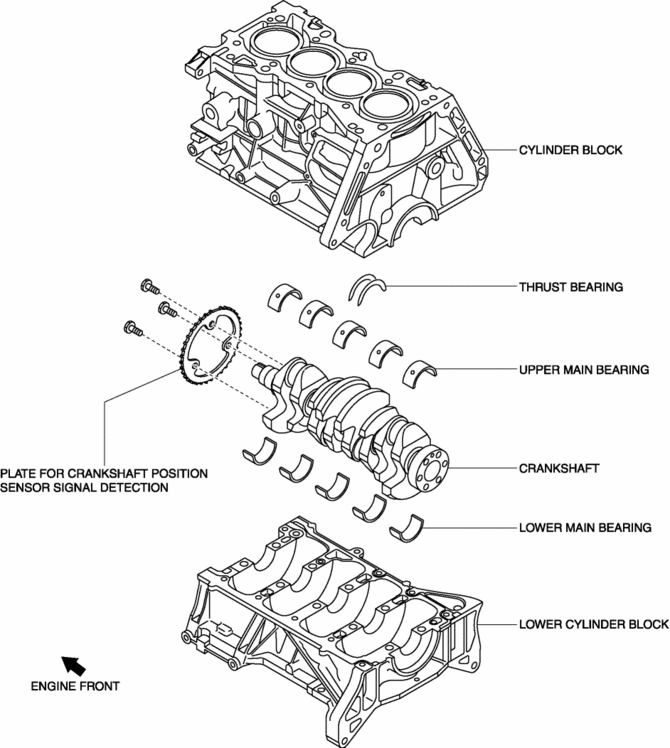
-
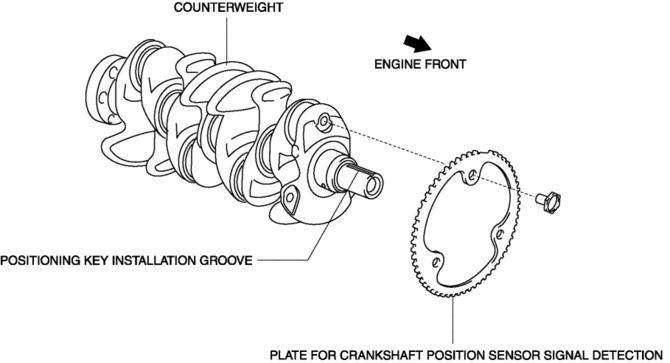
The crankshaft has a key groove to match timing to the crankshaft pulley.
-
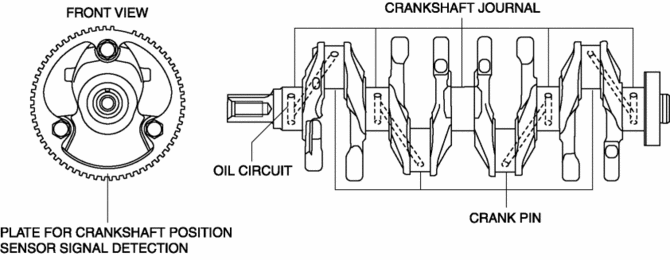
The crankshaft has the following parts shown in the figure.
-
The optimized shaft diameter ratio of the crankshaft journal and crank pin has reduced sliding resistance while maintaining rigidity.
-
The steel crankshaft has five bearings and eight counterweights for improved accuracy in the rotational balance.
-
The crankshaft journal and crank pin have been induction hardened* to bear high loads.
-
The crankshaft has an oil passage for supplying engine oil to the crankshaft journal and crank pin.
Main bearing
-
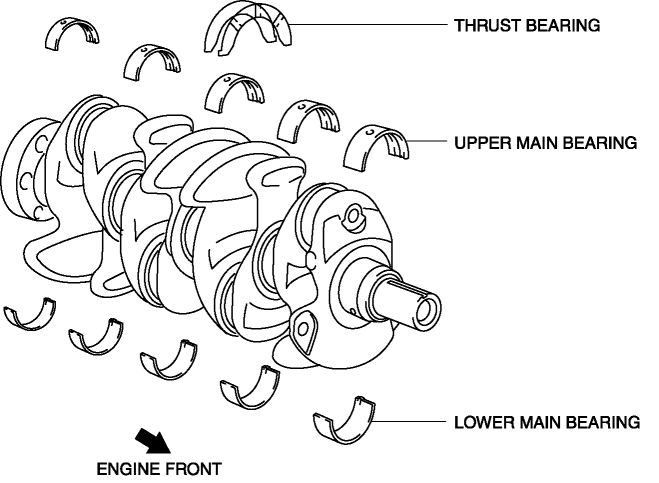
The main bearing is installed to the outer surface of the crankshaft journal.
-
The upper main bearing and lower main bearing are made of aluminum alloy.
-
The upper main bearing has an oil groove and oil hole.
-
Thrust force is suppressed by the thrust bearings on both sides of the No.3 journal.
 Crankshaft Position (CKP) Sensor
Purpose/Function
Detects the crankshaft speed as basic information for mainly determining
the fuel injection timing and ignition timing.
Detects the crankshaft speed and inputs it to ...
 Motor Mounts
...
Other materials:
Reporting Safety Defects (U.S.A.)
If you believe that your vehicle has a defect which could cause a crash or could
cause injury or death, you should immediately inform the National Highway Traffic
Safety Administration (NHTSA) in addition to notifying Mazda Motor Corporation (Your
Mazda Importer/Distributor).
If NHTSA receive ...
Heater Core Inspection
1. Inspect the heater core for damage, cracks, and water leakage.
If there is any malfunction, replace the heater core.
2. Visually inspect the fins for bending.
If there is any bending, use the end of a flathead screwdriver to straighten
the fins.
3. Visually inspect ...
Fuel Filler Lid Opener And Lever Removal/Installation
Fuel-filler Lid Opener
1. Open the fuel-filler lid.
2. Remove the nut.
3. Remove the service hole cover on the trunk side trim.
4. While pressing the tabs of the stopper bracket in the direction of arrow (1)
shown in the figure, press it in the direction of arrow (2) to detach it fr ...
