
Mazda CX-5 Service & Repair Manual: Steering Gear And Linkage
Purpose/ Function
-
The rotational movement input from the intermediate shaft is converted to a linear movement in the horizontal direction of the steering rack by the rack and pinion mechanism, and then transmitted to the tires and wheels.
Construction
-
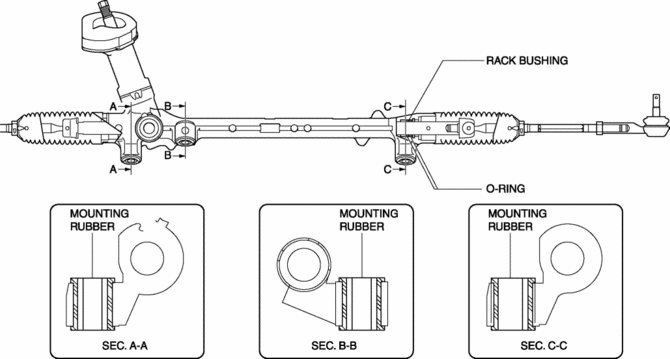
A size and weight-reduced rack and pinion system steering gear has been adopted.
-
Response and handling stability have been improved by the heightened support rigidity due to the integration of the steering gear mounts (three locations) and gear housing.
-
By using a higher steering gear ratio (15.5), the steerability has been improved.
-
By using O-rings on the support yoke and rack bushing, quietness has been improved.
Operation
-
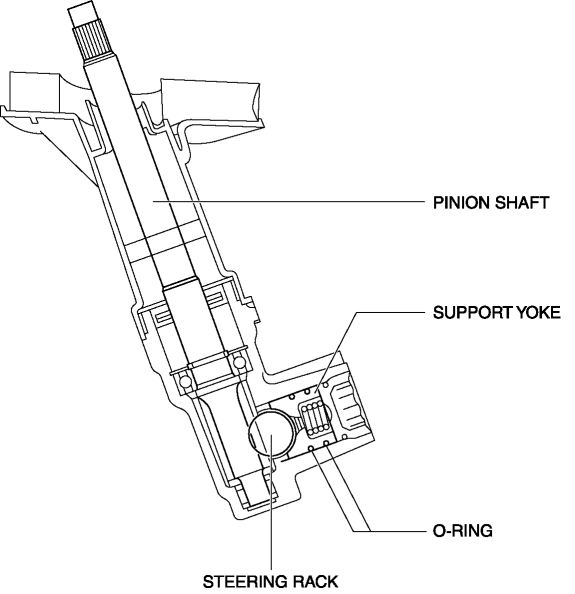
The rotational movement input from the steering shaft is converted to a linear movement in the horizontal direction of the steering rack by engaging the pinion shaft connected to the steering shaft and teeth of the steering rack. This linear movement is transmitted via the inner and outer ball joints to the steering knuckle to steer the tires left or right.
Fail-safe
-
Function not equipped.
 Torque Sensor
Purpose/ Function
The torque sensor detects the steering torque and the steering direction,
and outputs the signal to the Electric Power Steering (EPS) control module (CM).
Constructio ...
 Steering Gear And Linkage Assembly
CAUTION:
To prevent damage to the steering gear, secure it to the vise using a copper
plate or clean cloth.
1. Assemble in the order shown in the figure.
1
...
Other materials:
Taillight Bulb Removal/Installation
1. Disconnect the negative battery cable..
2. Insert a tape-wrapped flathead screwdriver into the service hole in the position
shown in the figure.
3. Move the flathead screwdriver in the direction of the arrow (1) shown in the
figure, pull out the service hole cover from the liftgate, a ...
Hood Adjustment
Height Difference Adjustment
1. Verify that the height difference between the hood and the body is within
the specification.
Standard clearance
a: 2.7—6.9 mm {0.11—0.27 in}
b: 4.1—8.0 mm {0.17—0.31 in}
2. Disconnect the negative battery cable..
3. Remove the ...
Shift Lock System [Fw6 A EL, Fw6 Ax EL]
Purpose, Function
The shift-lock system operates when the ignition is switched to ON and the
brake pedal is not depressed, and inhibits the selector lever from being shifted
from the P position to other positions.
If the shift-lock cannot be released by the normal operation, it ...
