
Mazda CX-5 Service & Repair Manual: Rear Seat Back Removal/Installation
CAUTION:
-
When removing or putting in the rear seat, contact with the surrounding areas of the vehicle could cause scratches and damage. When removing or putting in the rear seat, always use two or more persons to perform the work and be careful not to scratch or damage the rear seat and the surrounding area of the vehicle.
-
When performing the procedure with a rear seat back removed from the vehicle, perform the procedure on a clean cloth so as not to damage or soil the seat.
NOTE:
-
When removing the rear seat back from the vehicle or putting it back in, it can be performed smoothly by removing the headrest.
6:4 Split Type
1. Remove the trunk board..
2. Press the push knob to fold the rear seat back.
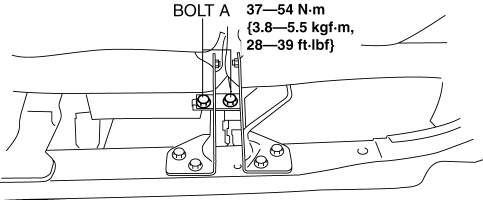
3. Remove bolts A.
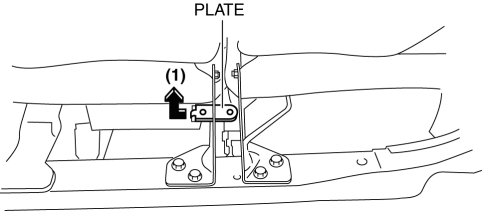
4. Remove the plate in the direction of the arrow (1) shown in the figure.
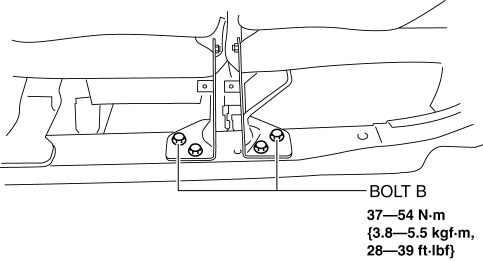
5. Remove bolts B.
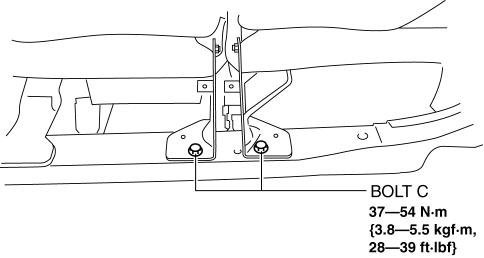
6. Remove bolts C.
7. Remove bolt D.
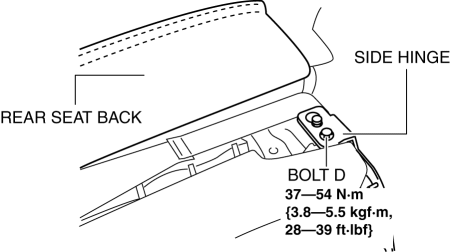
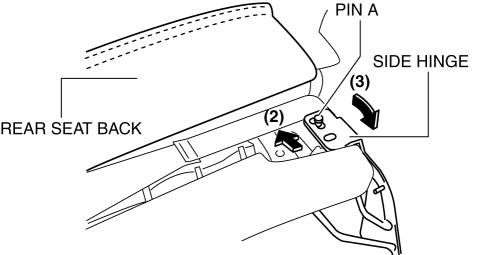
8. After moving the rear seat in the direction of the arrow (2) shown in the figure, remove pin B while moving the side hinge in the direction of the arrow (3).
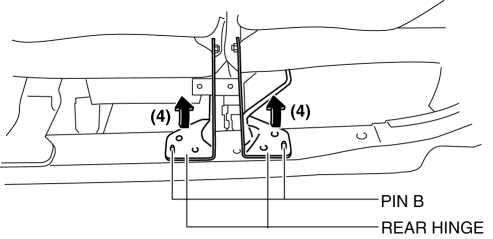
9. Move the rear hinge in the direction of the arrow (4) shown in the figure and set pin A aside.
10. Remove the rear seat back.
4:2:4 Split Type
1. Remove the trunk board..
2. Remove the rear seat..
3. Remove bolts A.
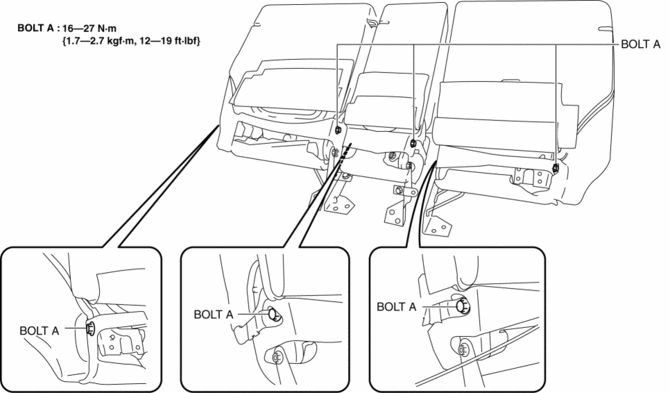
4. Remove the rear seat back.
5. Install in the reverse order of removal.
 Rear Seat Back Frame Removal/Installation
CAUTION:
When performing the procedure with a rear seat removed from the vehicle,
perform the procedure on a clean cloth so as not to damage or soil the seat.
6:4 Split Type
1. Remov ...
 Rear Seat Back Striker Removal/Installation
1. Disconnect the negative battery cable..
2. Press the push knob to fold the rear seat back.
3. Remove the following parts:
a. Trunk board.
b. Trunk end trim.
c. Rear scuff plate.
d. Trun ...
Other materials:
Vent Operation
Adjusting the Vents
Directing airflow
To adjust the direction of airflow, move the adjustment knob.
NOTE
hen using the air conditioner under humid ambient temperature conditions,
the system may blow fog from the vents. This is not a sign of trouble but a result
of humid air being suddenly co ...
Rear Console Disassembly/Assembly
1. Disassemble in the order indicated in the table.
1
Screw A
2
Rear console bracket
3
Screw B
4
Side panel
5
Rear console box
6
U ...
Essential Information
Introduction
Be extremely careful and prevent injury to yourself and others or damage to your
vehicle when using this manual for inspection and maintenance.
If you are unsure about any procedure it describes, we strongly urge you to have
a reliable and qualified service shop perform the work ...
