
Mazda CX-5 Service & Repair Manual: Hood Latch And Release Lever Removal/Installation
Hood Latch
1. Open the hood.
2. Disconnect the negative battery cable..
3. Remove the front bumper..
4. Insert a tape-wrapped flathead screwdriver into the position shown in the figure.
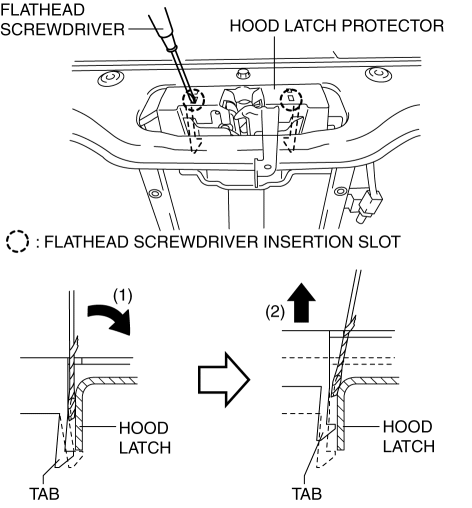
5. Move the tape-wrapped flathead screwdriver in the direction of arrow (1) shown in the figure to press the hood latch protector tab, and lift the tab up in the direction of arrow (2) and detach its tab from the fuse box.
6. Detach all the hood latch protector tabs from the hood latch and remove the hood latch protector.
7. While pressing the tabs of the clip in the direction of arrow (1) shown in the figure, press it in the direction of arrow (2) to detach the connector tabs from the body.
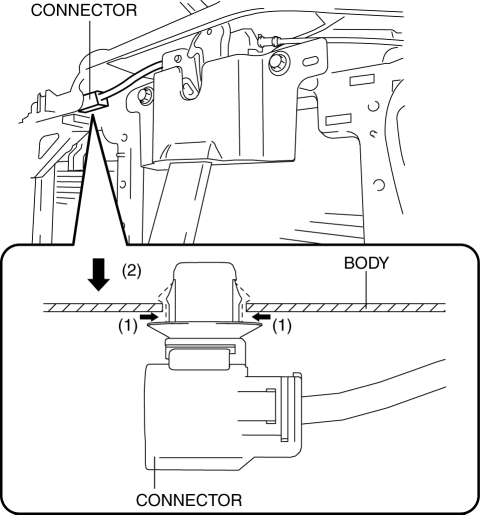
8. Remove the connector antenna from the body.
9. Disconnect the connector.
10. Disconnect the hood release cable.
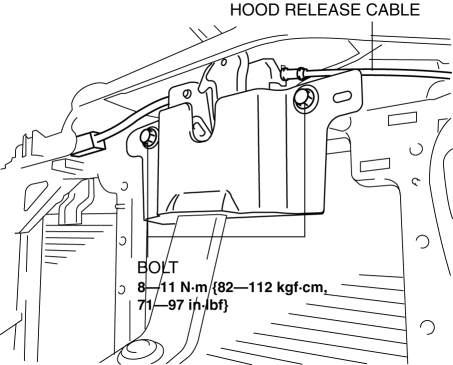
11. Remove the bolts.
12. Remove the hood latch.
13. Install in the reverse order of removal.
14. Adjust the hood..
Hood Release Lever
1. While pulling the hood release lever, insert a tape-wrapped flathead screwdriver into the position shown in the figure.
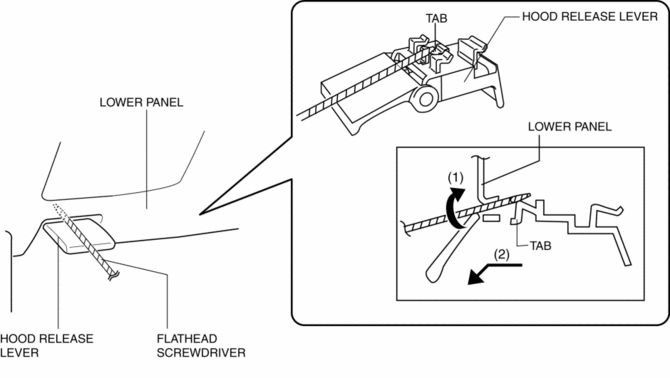
2. Move the tape-wrapped flathead screwdriver in the direction of arrow (1) shown in the figure to press the tab, and pull the hood release lever in the direction of arrow (2) to detach it from the lower panel.
CAUTION:
-
Remove the hood release lever while being careful not to damage the hood release cable with the flathead screwdriver.
3. Pull the hood release lever to remove it from the lower panel.
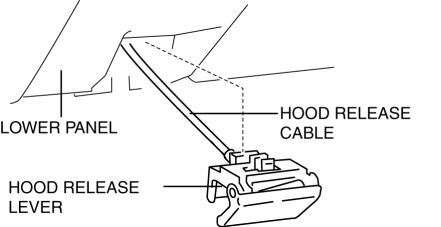
4. Disconnect the hood release cable from the hood release lever.
5. Install in the reverse order of removal.
 Hood Disassembly/Assembly
1. Disassemble in the order indicated in the table.
1
Fastener
2
Hood insulator
3
Shroud seaming welt
...
 Hood Latch Switch
Purpose
Detects the open/closed condition of the hood.
Function
The hood latch switch is utilized in the theft-deterrent system control.
For the theft-deterrent system ...
Other materials:
Rear Wiper Motor Inspection
1. Disconnect the negative battery cable..
2. Open the liftgate.
3. Remove the following parts:
a. Rear wiper arm and blade.
b. Liftgate upper trim.
c. Liftgate side trim.
d. Liftgate recess.
e. Liftgate lower trim.
4. Remove the rear wiper motor connector.
Rear Wiper Motor Ope ...
Oil Seal (Differential) Replacement [C66 M R]
1. Remove the front under cover No.2..
2. Drain the manual transaxle oil..
3. Disconnect the drive shaft (LH) from the MTX..
4. Disconnect the drive shaft (RH) from the MTX..
5. Remove the oil seal (LH).
6. Remove the oil seal (RH).
7. Using the SSTs and a hammer, tap a new oil s ...
Liftgate Removal/Installation
WARNING:
Removing the stay damper, liftgate hinge securing bolt, or liftgate without
supporting the liftgate may cause the liftgate to fall off and injure you. When
removing the stay damper, liftgate hinge, or liftgate, always use two persons
to perform the work.
1. Disconnect ...
