
Mazda CX-5 Service & Repair Manual: Rear Seat Center Armrest Removal/Installation
1. Operate the push knob (RH) and lower the rear seat back (RH).
2. Remove screw A.
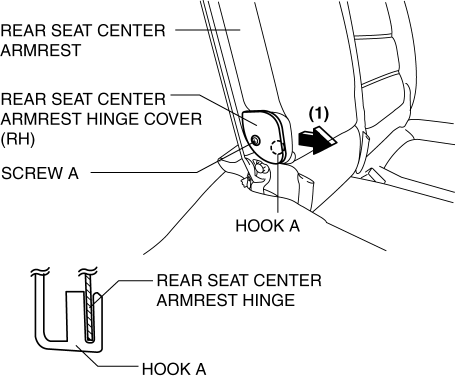
3. Remove the rear seat center armrest hinge cover (RH) in the direction of the arrow (1) shown in the figure while setting hook A aside.
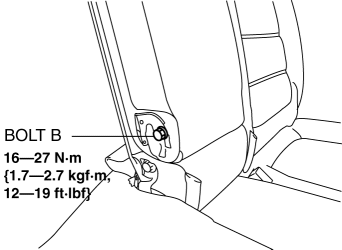
4. Remove bolt B.
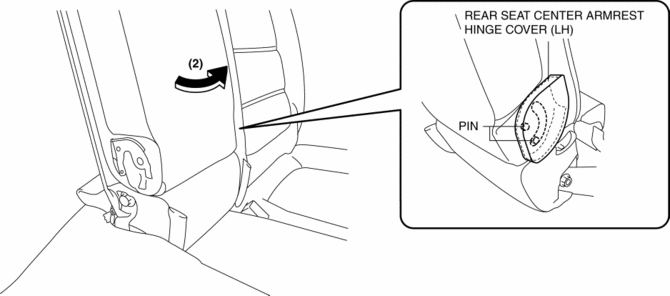
5. Remove the rear seat center armrest in the direction of the arrow (2) shown in the figure while setting the pins aside.
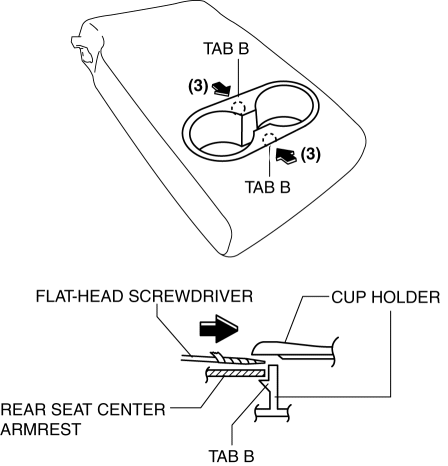
6. Using a flathead screwdriver wrapped in protective tape, insert it in the gap between the cup holder and the rear seat center armrest in the direction of the arrow (3) shown in the figure, and disengage tabs B.
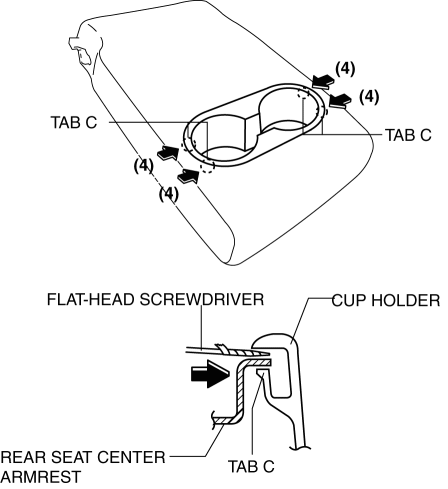
7. Using a flathead screwdriver wrapped in protective tape, insert it in the gap between the cup holder and the rear seat center armrest in the direction of the arrow (4) shown in the figure, and disengage tabs C.
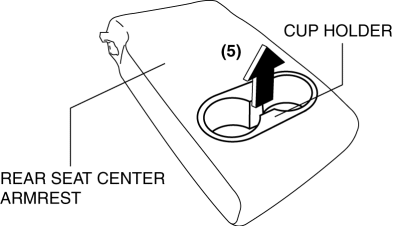
8. Remove the cup holder in the direction of the arrow (5) shown in the figure.
9. Install in the reverse order of removal.
 Rear Seat Back Trim Removal/Installation
6:4 Split Type
1. Remove the trunk board..
2. Remove the rear seat back..
3. Remove the headrest.
4. Remove the rear seat back frame..
5. Remove the C rings in the order of (1), (2), (3), and ...
 Rear Seat Cushion Removal/Installation
CAUTION:
When removing or putting in the rear seat cushion, contact with the surrounding
areas of the vehicle could cause scratches and damage. When removing or putting
in the rear seat ...
Other materials:
Auto Light Off System
Purpose
The auto light-Off system turns off the TNS or headlights automatically.
The front body control module (FBCM) performs auto light-Off system fail-safe..
Function
The auto light-Off system controls the front body control module (FBCM).
The front body contro ...
DSC HU/CM Removal/Installation
WARNING:
If the DSC HU/CM configuration is not completed, it could result in an unexpected
accident due to the DSC being inoperative. If the DSC HU/CM is replaced, always
use the automatic configuration function so that the DSC operation conditions
are correct.
If the DSC re ...
Front Shock Absorber Disposal
WARNING:
Whenever drilling into a front shock absorber, wear protective eye wear.
The gas in the front shock absorber is pressurized, and could spray metal chips
into the eyes and face when drilling.
1. Place the shock absorber on a level surface or with the piston pointing d ...
