
Mazda CX-5 Service & Repair Manual: Lap Pre Tensioner Seat Belt [Two Step Deployment Control System]
Purpose
-
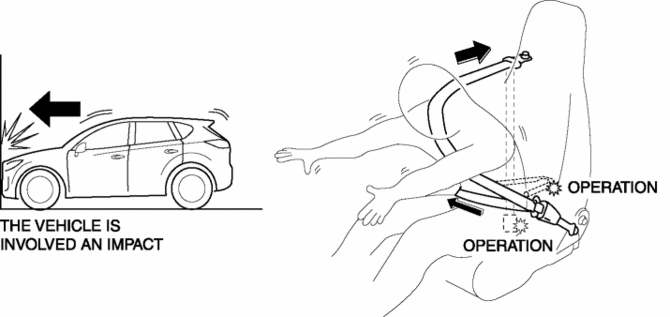
The lap pre-tensioner seat belts retract and tighten the seat belt webbing to protect the front passengers during a collision.
Function
-
The lap pre-tensioner seat belts operate (deploy) based on the operation signal from the SAS control module to instantly retract and tighten the belt webbing, restraining the driver.
-
The lap pre-tensioner seat belts operate in conjunction with the pre-tensioner seat belts.
Construction
-
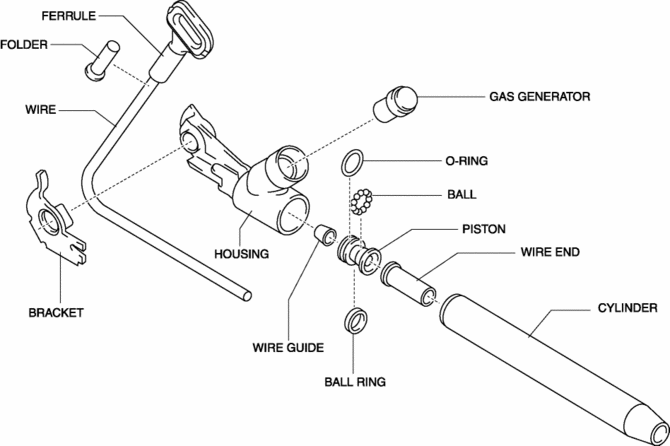
The lap pre-tensioner seat belts are installed to the anchors of the front seat belts.
-
The lap pre-tensioner seat belts consist of the following parts shown in the figure:
Operation
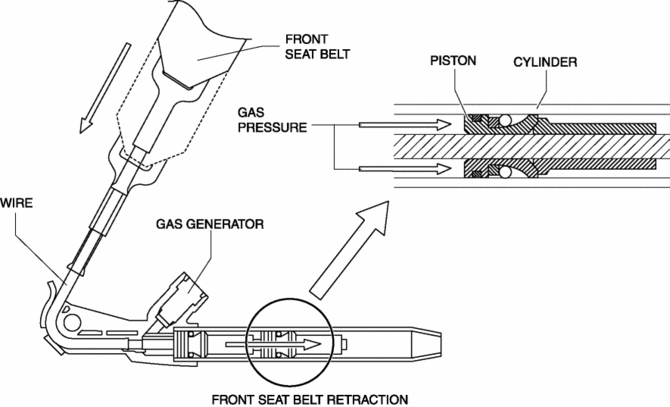
Lap pre-tensioner activation
1. The gas generator emits a spark when a signal is received from the SAS control module, causing gas to form.
2. The gas pressure pushes the piston inside the tube, pulling the lead wire.
3. As the lead wire is pulled, the part of the seat belt attached to the wire is also pulled.
4. The slack in the belt is tightened by the front seat belt being pulled by the lap pre-tensioner seat belt and the seat belt ELR mechanism, restraining the passengers.
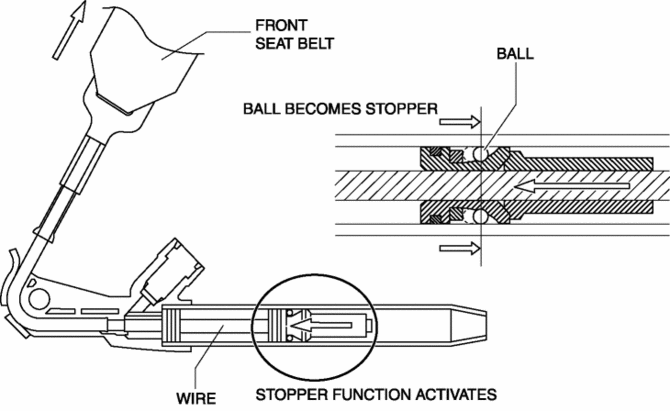
After activation
1. After operating (deploying) the pre-tensioner, the lead wire is pulled back. However the front seat belts are locked by activation of the stopper function so that the belt webbing is not released.
2. The restraint force of the seat belt is adjusted by the front seat belt load limiter mechanism, preventing injury to the driver and passenger from seat belt pressure.
Fail-safe
-
Function not equipped.
 Front Seat Belt Removal/Installation
WARNING:
Handling the front seat belt (pre-tensioner seat belt) improperly can accidentally
deploy the pre-tensioner seat belt, which may seriously injure you. Read the
air bag system se ...
 Pre Tensioner Seat Belt [Standard Deployment Control System]
Purpose
The pre-tensioner seat belt retracts and tightens the seat belt webbing to
protect the front passengers during a collision.
Function
The pre-tensioner seat belts operate ...
Other materials:
Oil Pump Removal/Installation [Skyactiv G 2.0]
WARNING:
Hot engines and engine oil can cause severe burns. Turn off the engine and
wait until it and the engine oil have cooled.
A vehicle that is lifted but not securely supported on safety stands is dangerous.
It can slip or fall, causing death or serious injury. Never work ...
Clock Spring Removal/Installation [Standard Deployment Control System]
CAUTION:
If the disc on the combination switch is deformed or has foreign material
adhering to it, performance of the steering angle sensor may be reduced, causing
abnormal operation. When handling the clock spring, be careful not to deform
the disc and make sure there is no foreign ...
Wiper/Washer System
Outline
The following wiper/washer system has been adopted.
Windshield wiper system
Rear wiper system
Auto wiper system (with auto wiper system)
Washer fluid-level sensor (with washer fluid-level sensor)
Specification
Windshiel ...
