
Mazda CX-5 Service & Repair Manual: Thermostat
Purpose, Function
-
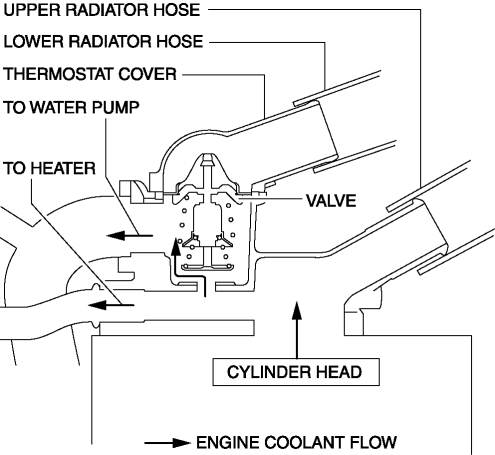
When the engine coolant temperature is low, the thermostat blocks the engine coolant passage between the radiator and engine. As a result, because engine coolant cycles without passing through the radiator, warming is promoted.
Construction
-
The thermostat is installed to the rear part of the cylinder head.
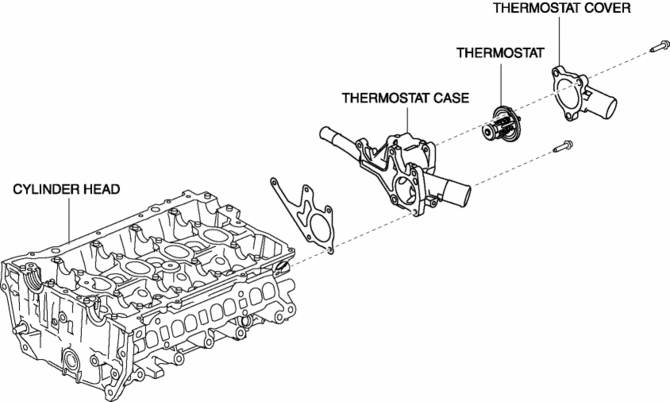
-
The thermostat has the following parts:

Operation
1. When the engine coolant temperature decreases, the thermostat valve closes and engine coolant circulates without passing through the radiator.
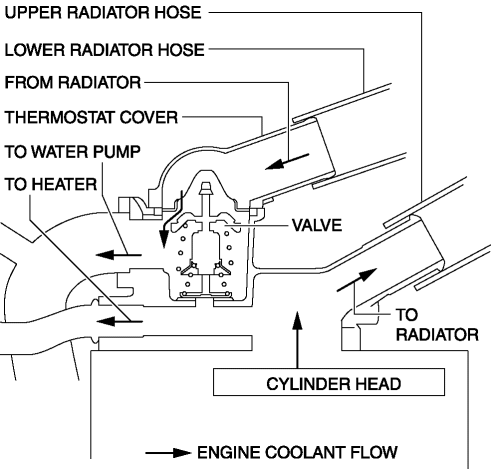
2. When the engine coolant temperature is 80.5—83.5°C, the thermostat valve starts to open and the engine coolant passed through the radiator flows to the engine.
 Thermostat Removal/Installation
WARNING:
Never remove the cooling system cap or loosen the radiator drain plug while
the engine is running, or when the engine and radiator are hot. Scalding engine
coolant and steam may ...
 Emissions
...
Other materials:
Side Turn Light Inspection
1. Disconnect the negative battery cable..
2. Remove the following parts:
a. Outer mirror glass.
b. Upper outer mirror garnish.
c. Side turn light.
3. Apply battery voltage to side turn light terminal A, and connect terminal
B to ground.
4. Verify that the LED illuminates.
...
Blower Unit Disassembly/Assembly
CAUTION:
Apply only the specified grease to the link. Otherwise abnormal noise or
improper operation may result.
1. Disassemble in the order indicated in the table.
1
Air filter
2
Harness
3
Blower ...
Ion Sensor
Purpose/Function
Detects ion generation in the combustion chamber for detecting pre-ignition.
Detects ions which occur due to fuel combustion as current by applying bias
voltage to the spark plug, which is amplified in the ignition coil internal
circuit and input to the PCM.
...
