
Mazda CX-5 Service & Repair Manual: Crankshaft, Main Bearing
Purpose, Function
-
The crankshaft converts the reciprocating movement of the piston to a rotational movement via the connecting rod.
-
The main bearing forms an oil film on the outer surface of the crankshaft journal to prevent wear due to sliding.
Construction
Crankshaft
-
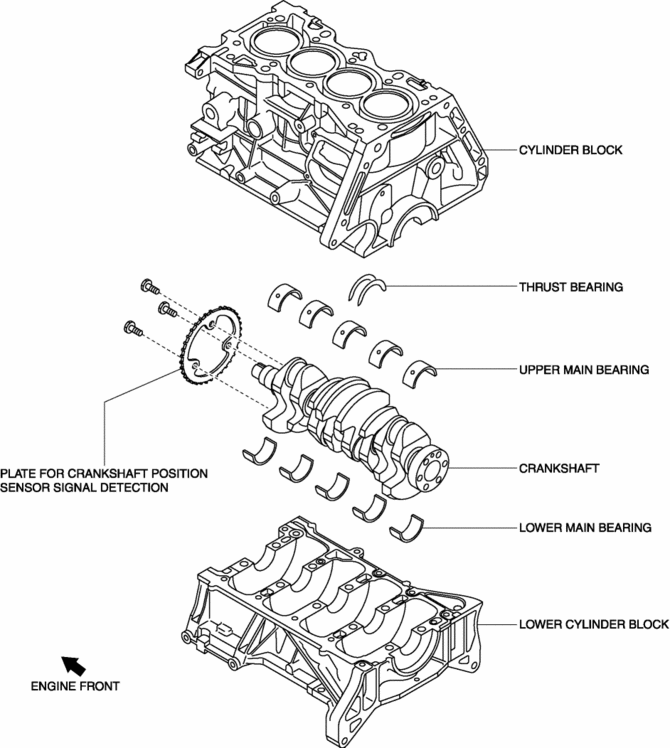
The crankshaft is installed to the inside (crankcase) of the cylinder block.
-
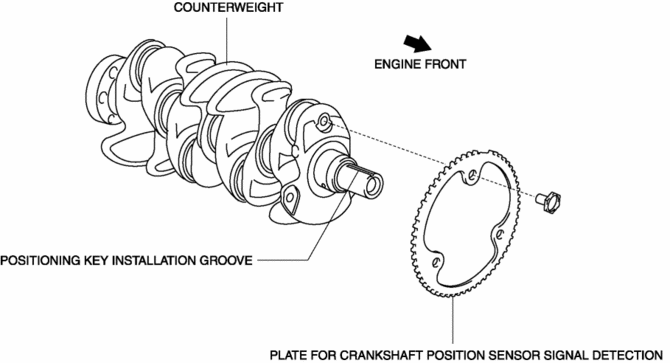
The crankshaft has a key groove to match timing to the crankshaft pulley.
-
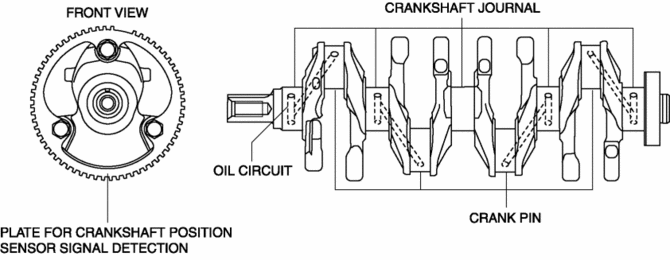
The crankshaft has the following parts shown in the figure.
-
The optimized shaft diameter ratio of the crankshaft journal and crank pin has reduced sliding resistance while maintaining rigidity.
-
The steel crankshaft has five bearings and eight counterweights for improved accuracy in the rotational balance.
-
The crankshaft journal and crank pin have been induction hardened* to bear high loads.
-
The crankshaft has an oil passage for supplying engine oil to the crankshaft journal and crank pin.
Main bearing
-
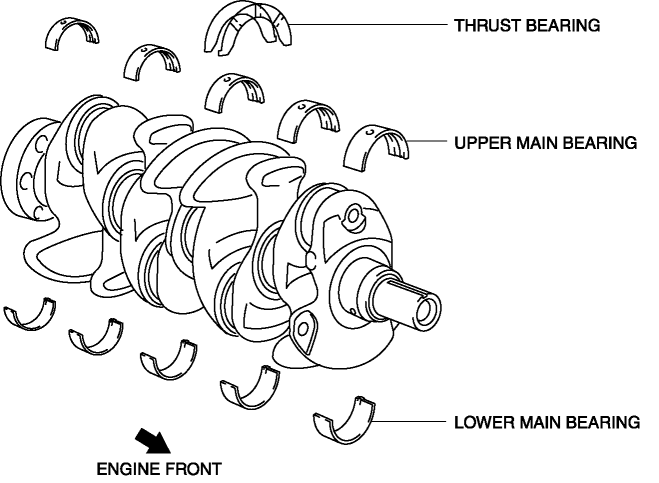
The main bearing is installed to the outer surface of the crankshaft journal.
-
The upper main bearing and lower main bearing are made of aluminum alloy.
-
The upper main bearing has an oil groove and oil hole.
-
Thrust force is suppressed by the thrust bearings on both sides of the No.3 journal.
 Crankshaft Position (CKP) Sensor
Purpose/Function
Detects the crankshaft speed as basic information for mainly determining
the fuel injection timing and ignition timing.
Detects the crankshaft speed and inputs it to ...
 Motor Mounts
...
Other materials:
Engine Coolant Protection Inspection
1. Measure the engine coolant temperature and specific gravity using a thermometer
and a hydrometer.
CAUTION:
Use engine coolant at a concentration that meets the environmental conditions
in which the vehicle is driven, otherwise engine damage could occur.
The engine has alumi ...
Washer Fluid Level Sensor Inspection
1. Disconnect the negative battery cable..
2. Set the front over fender aside..
3. Set the mudguard (RH) aside..
4. Remove the front bumper..
5. Inspect for continuity according to washer fluid level between the washer
fluid-level sensor terminals.
If not as indicated in th ...
Outside the United States/Canada
Government regulations in the United States/Canada require that automobiles meet
specific emission regulations and safety standards. Therefore, vehicles built for
use in the United States/Canada may differ from those sold in other countries.
The differences may make it difficult or even impossi ...
